
Motion Wake-Up Sensor Solution for Ultra-Low Power Devices
Design truly energy-efficient systems with an event-driven architecture that activates only when motion occurs.
- Near-zero standby power consumption (~nA level)
- Event-driven system architecture
- No continuous sensing or data processing required
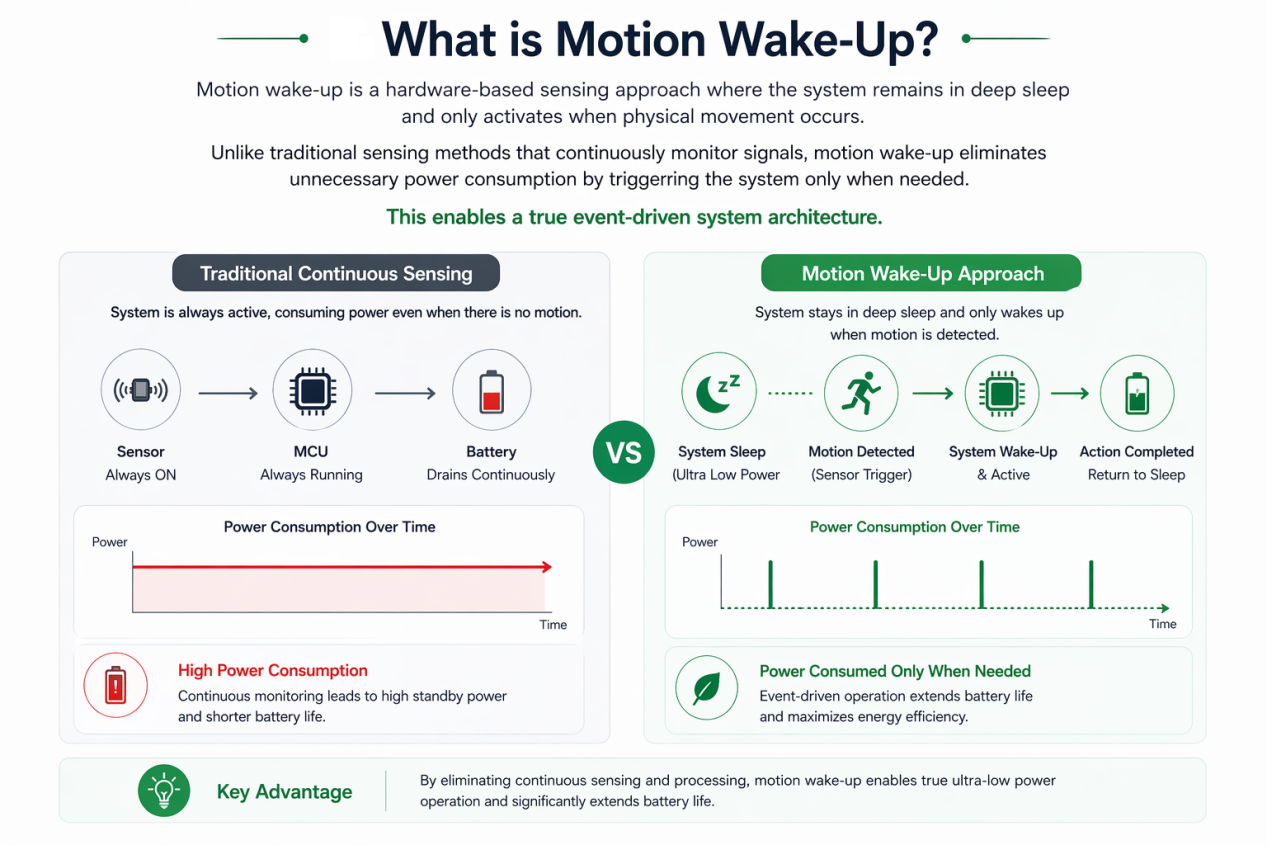
What is Motion Wake-Up?
Motion wake-up is a hardware-based sensing approach where the system remains in deep sleep and only activates when physical movement occurs.
Unlike traditional sensing methods that continuously monitor signals, motion wake-up eliminates unnecessary power consumption by triggering the system only when needed.
This enables a true event-driven system architecture.
Why Motion Wake-Up Matters in Low Power Design
Motion wake-up is not just a sensor choice—it redefines how low power systems are designed.
Ultra-Low Power Consumption
Eliminate standby power draw by avoiding continuous sensing.

Simplified System Design
No need for complex signal processing or filtering algorithms.
Instant Response
System wakes up immediately when motion is detected.
Lower System Cost
Reduce BOM cost by eliminating high-power sensors.
Motion Wake-Up Architecture
An event-driven architecture that keeps the system inactive until motion occurs. Before understanding the benefits, it’s important to see how a motion wake-up system actually works at the architecture level.
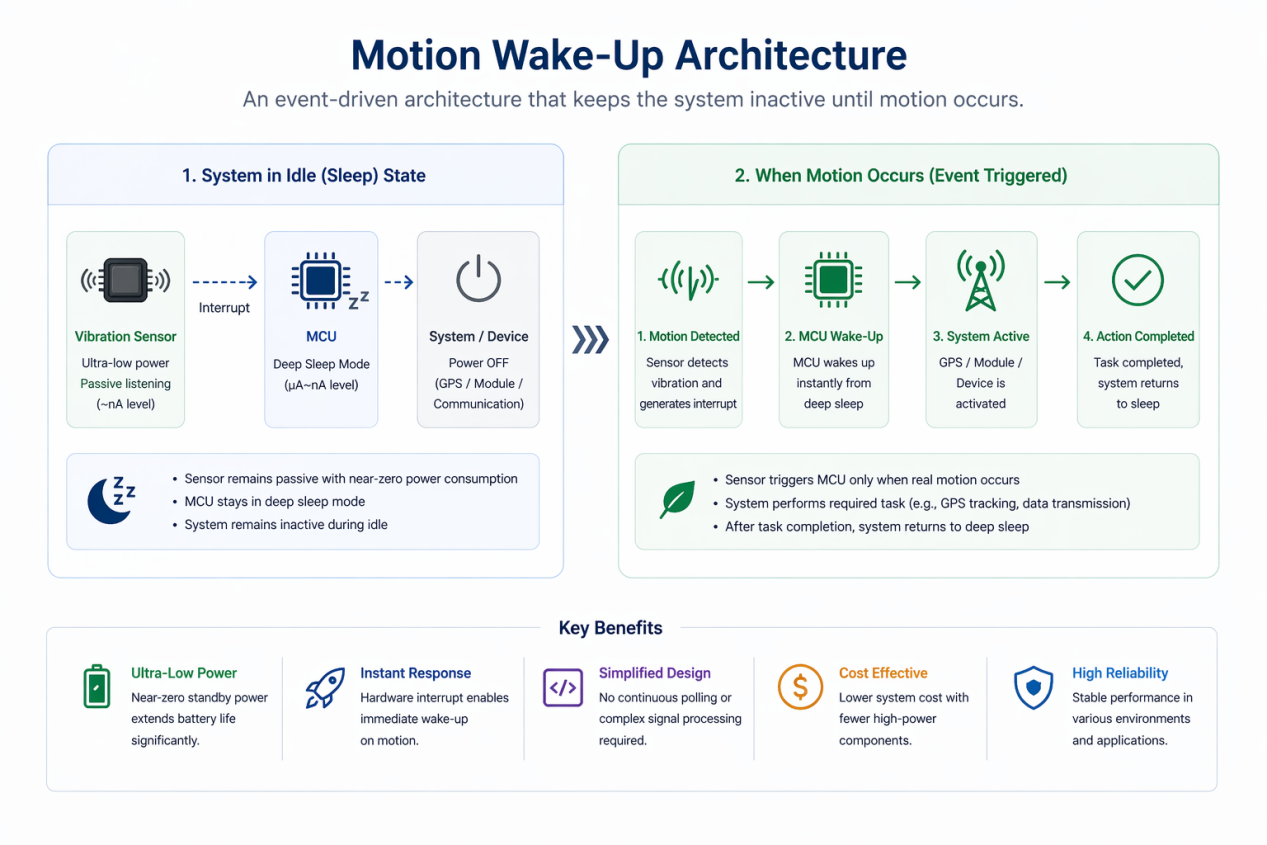
System behavior — idle
- •Sensor remains passive with near-zero power consumption
- •MCU stays in deep sleep mode
- •System remains inactive during idle
When motion occurs
- →Sensor generates a trigger signal
- →MCU wakes up instantly
- →System (GPS / alarm / device) is activated
- →System returns to sleep after operation
This architecture minimizes power consumption while maintaining responsiveness.
Motion Wake-Up vs Traditional Continuous Sensing
Traditional sensing relies on continuous monitoring, which increases power consumption and system complexity. Motion wake-up fundamentally changes this approach.
| Feature | Continuous Sensing | Motion Wake-Up |
|---|---|---|
| Power consumption | Continuous µA-level | Near-zero (nA-level) |
| MCU operation | Periodic wake-up | Deep sleep |
| Architecture | Polling-based | Event-driven |
| Firmware complexity | High | Low |
| System efficiency | Lower | Higher |
Applications Enabled by Motion Wake-Up
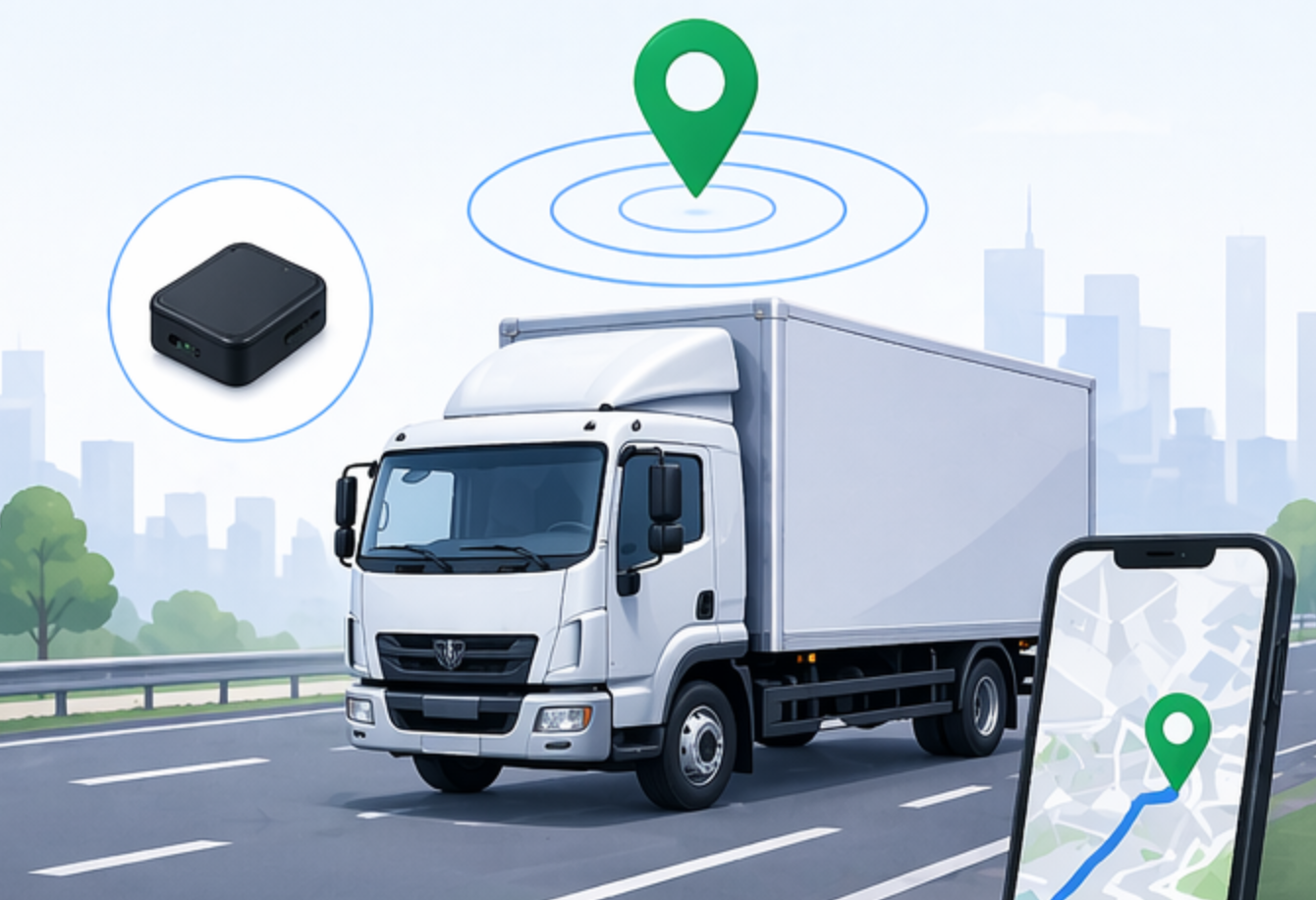
GPS Trackers
Extend battery life by activating GPS only when motion occurs.
Asset Tracking Devices
Enable long-term deployment with minimal maintenance.
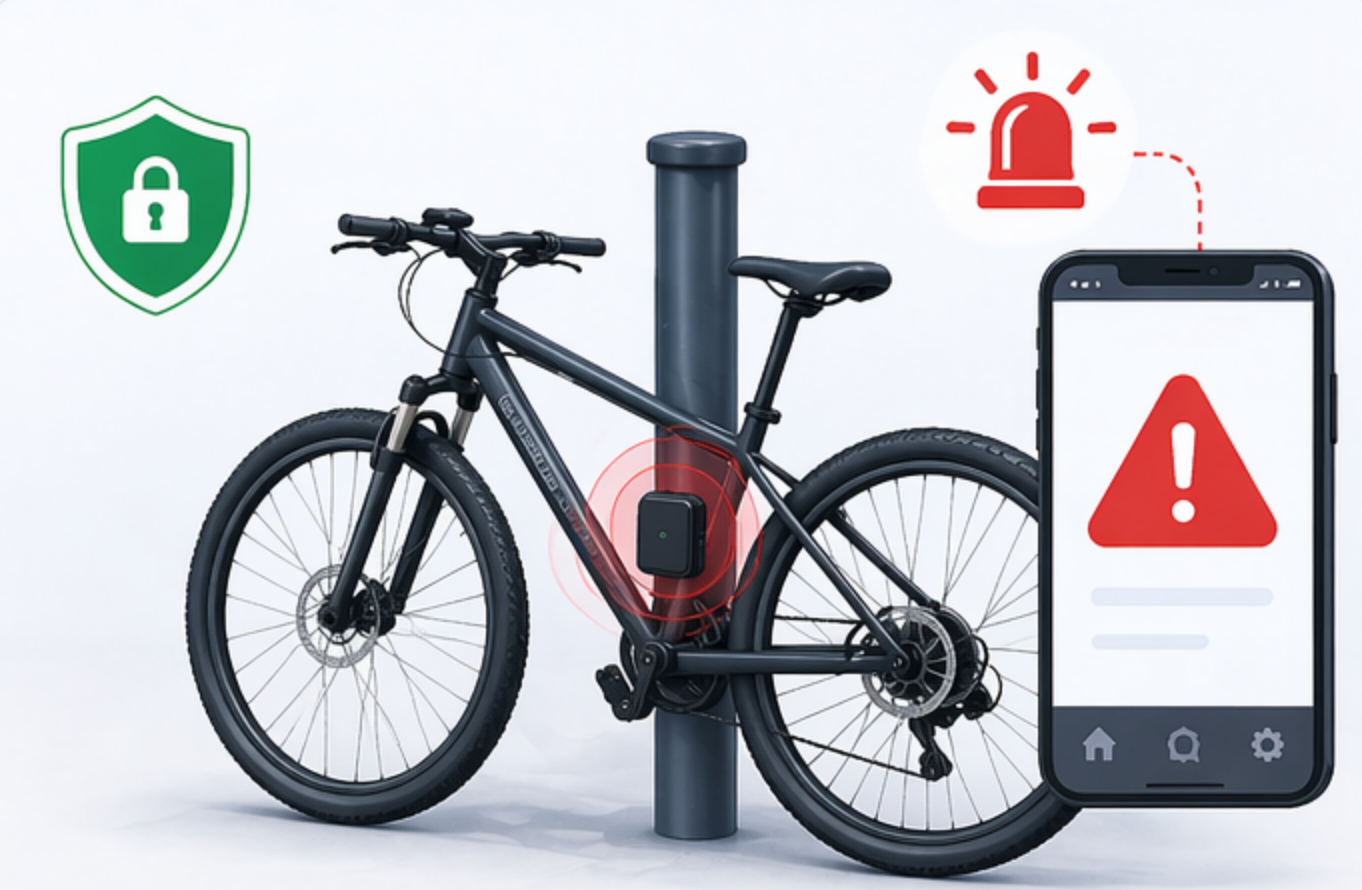
Anti-Theft Systems
Trigger alerts only on real intrusion events.
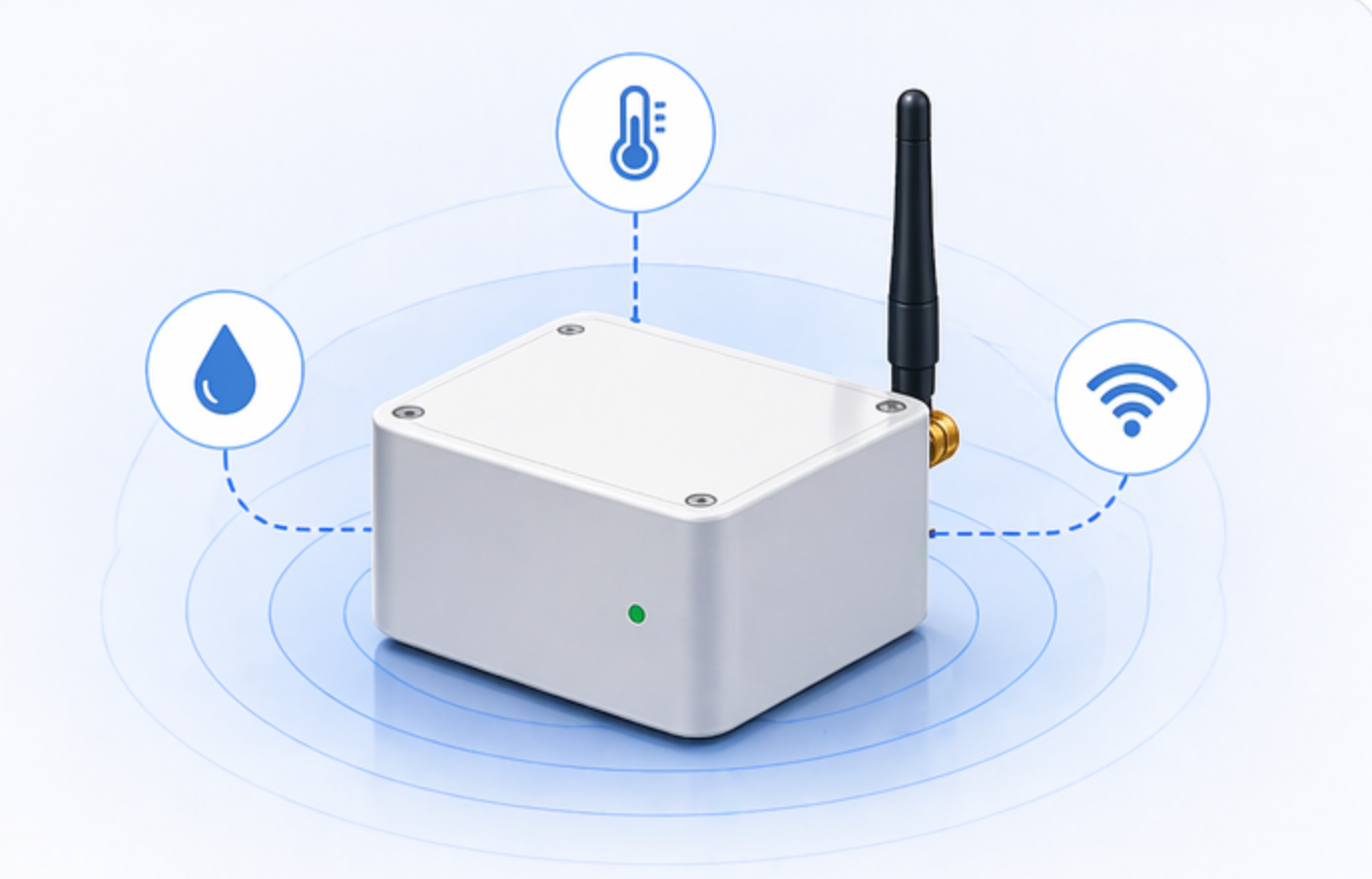
Battery-Powered IoT Devices
Reduce standby power consumption across various applications.
Recommended Motion Wake-Up Sensors

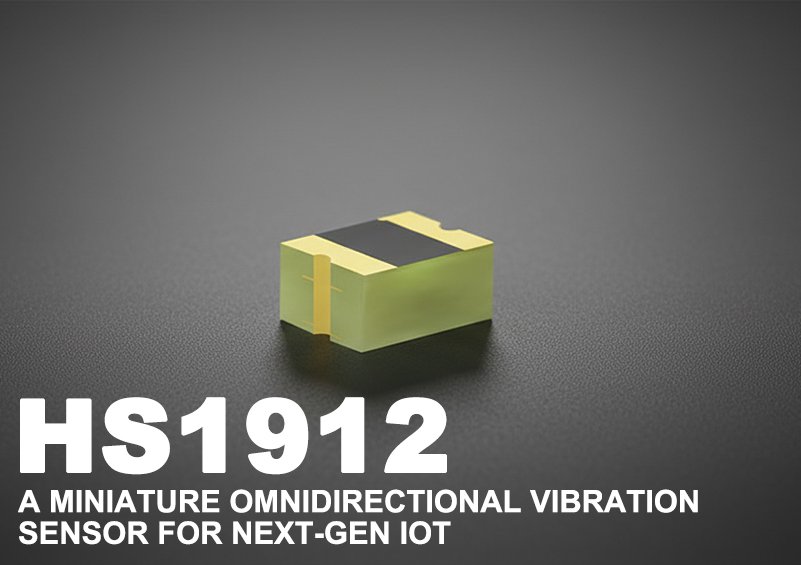
KD1912
High-Endurance Vibration Sensor
Ideal for long-term deployment and industrial environments.
View productKD1911H
High-Sensitivity Vibration Sensor
High sensitivity for security and anti-tamper detection.
View productNot sure which sensor fits your design? Our engineers can help you select the optimal solution.
Explore Other Sensor Solutions
Explore related sensor solutions:
Build Ultra-Low Power Systems with Motion Wake-Up
We provide sensor solutions, reference designs, and engineering support to help you implement motion wake-up architecture in your products.