
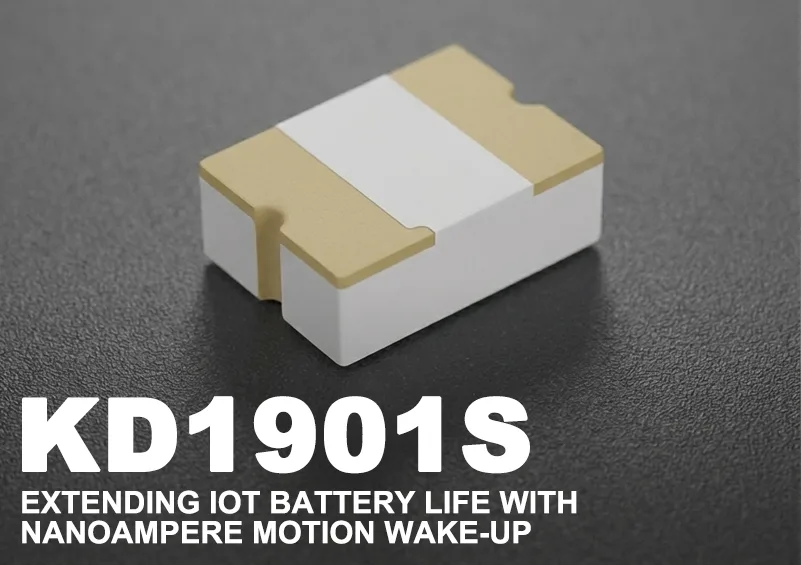
In the world of battery-powered IoT devices—from smart styluses to anti-theft trackers—power management is everything. The most energy-efficient device is one that sleeps until it is absolutely needed.
Enter the KD1901S, a miniature SMD omnidirectional vibration sensor designed specifically for “Motion Wake-Up” functions. Unlike active accelerometers that drain battery continuously, the KD1901S is a passive component that consumes effectively zero power until movement occurs.
1. The “Zero-Power” Advantage
The standout feature of the KD1901S is its efficiency. It operates as a mechanical switch triggered by inertia.
- Static State: High Impedance (Open Circuit). Power consumption is negligible.
- Active State: When vibration occurs, the internal ball bridges the contacts.
- Current Draw: As low as 50nA (depending on your external resistor).
For engineers designing wearables or remote controls, this means your device can remain in deep sleep for months or years, waking up only when the user picks it up.
2. Omnidirectional Detection Technology
Mechanical switches often suffer from “dead zones”—angles where vibration isn’t detected. The KD1901S solves this with a precision-engineered internal cavity.
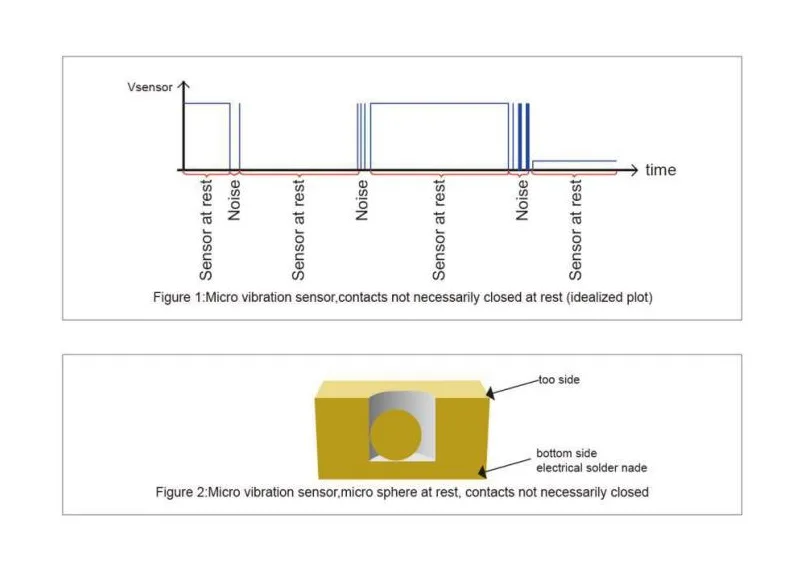
The internal free-moving metallic ball is free to move 360°. Whether the vibration comes from the X, Y, or Z axis, the ball bounces against the electrodes, generating a reliable pulse train.
- Sensitivity: Optimized for 4 major axes (0°, 90°, 180°, 270°).
- Reliability: Rated for over 1,000,000 cycles.
Interactive Lab: Virtual Oscilloscope
Click the “SHAKE” button below to simulate vibration and observe the digital pulse output on the virtual scope.
TIME: 10ms/div
3. Circuit Design & Integration
Integrating the KD1901S is straightforward, but "de-bouncing" is key to a stable signal.
The Basic Wake-Up Circuit
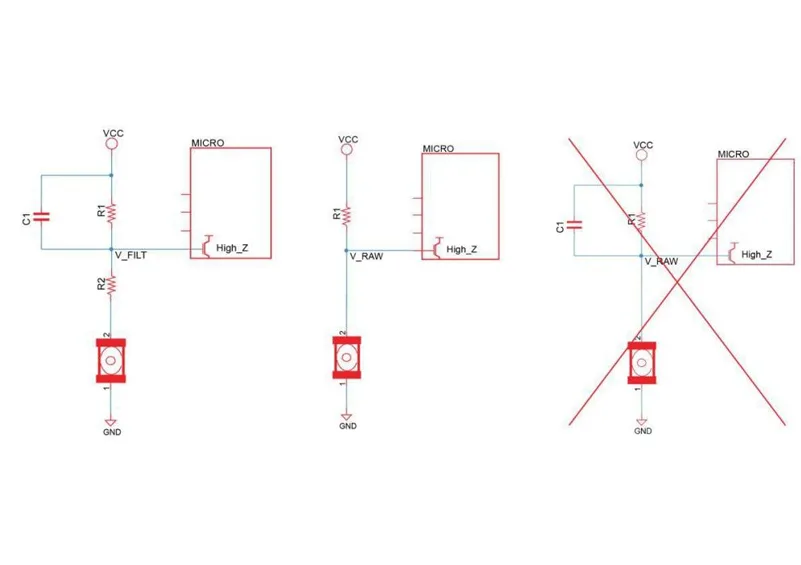
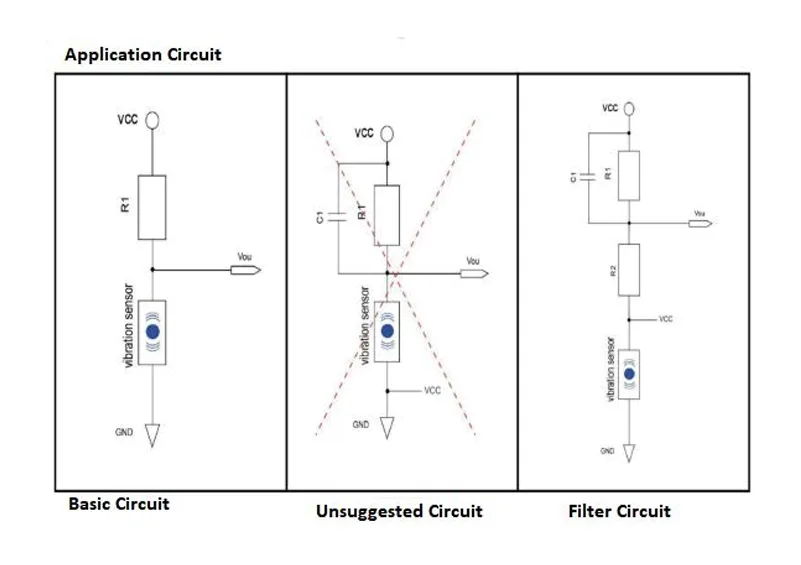
The sensor acts as a switch. In a typical setup, you pull the signal line HIGH. When the sensor vibrates, it momentarily pulls the line LOW, creating a falling edge interrupt for your MCU.
Filtering Noise (Sensitivity Adjustment)
For applications in noisy environments (like automotive trackers), you might want to ignore tiny vibrations. The datasheet recommends an RC Filter network.
- Add Capacitor (C1): Filters out high-frequency noise.
- Add Resistor (R2): Smoothes the pulse output.
- Tip: High-value resistors help reduce power consumption further, but ensure your MCU can detect the pulse width.
4. Built for SMT Manufacturing
The KD1901S is designed for modern mass production. Its high-temperature resistant shell (up to 400°C short-term) and fully sealed structure make it compatible with standard reflow soldering processes.
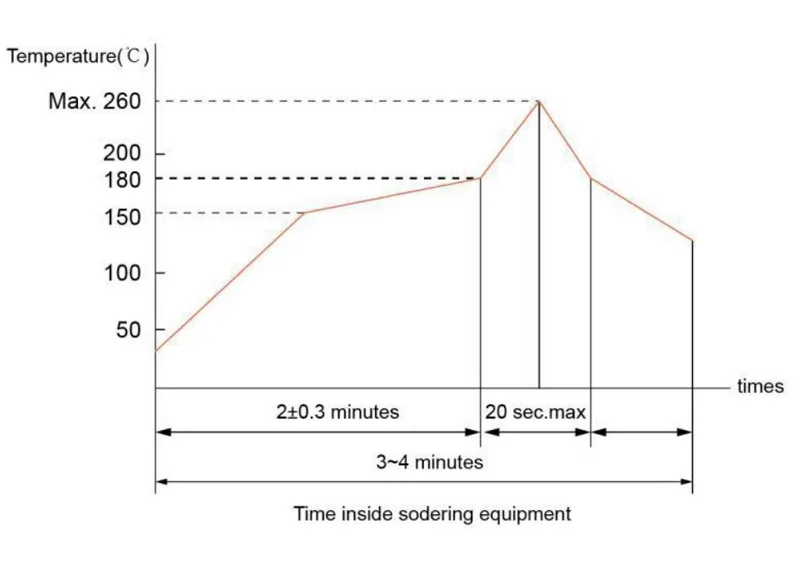
- Reflow Profile: Peak temperature 260°C (≤ 5 seconds).
- Manual Soldering: 300°C for < 3 seconds.
- Durability: Waterproof and dustproof sealing ensures performance even after washing processes.
5. Ideal Applications
This sensor is the perfect replacement for traditional spring switches or expensive accelerometers in:
- Smart Pens: Wake up the Bluetooth connection only when writing begins.
- TPMS (Tire Pressure): Activate sensors only when the car moves.
- RFID Tags: Transmit signal only during transport/handling to save battery.
- Smart Home: Vibration sensors for window break detection.
Summary
The KD1901S proves that big innovation often comes in small packages. By switching from continuous polling to event-driven wake-up using the KD1901S, you can extend your product's battery life significantly while reducing system cost.
Interested in testing the KD1901S? Contact Kingdta for samples and technical support.
 English
  Chinese